
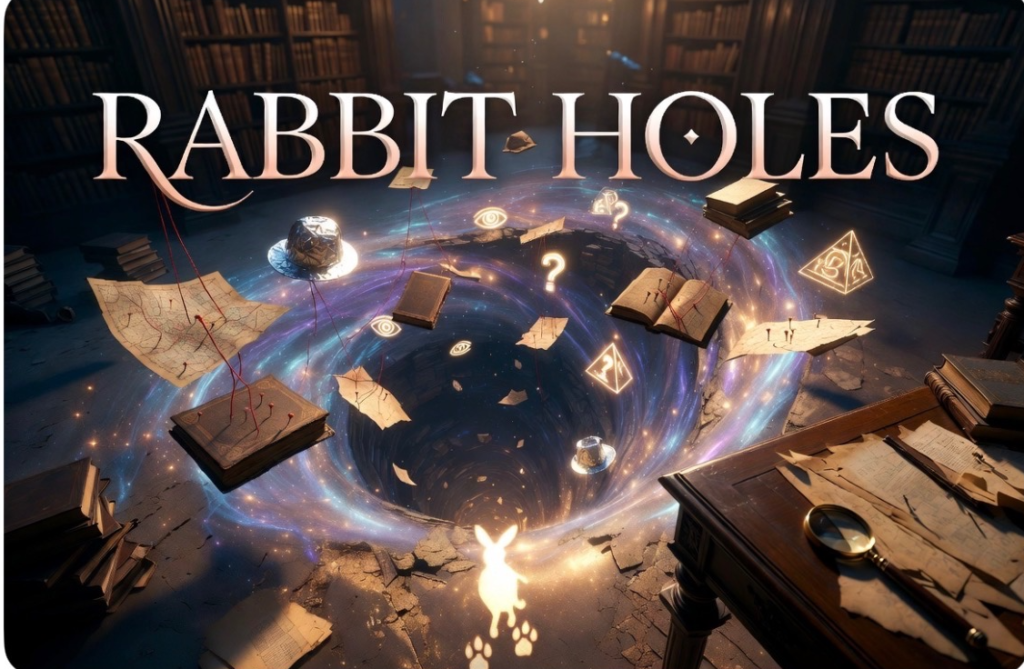
Conspiracy theories have captivated human imagination for centuries, offering alternative explanations for major historical events, political decisions, and cultural phenomena. From JFK’s assassination to moon landing skepticism, these narratives often emerge from
genuine questions about official accounts—yet they range widely in plausibility and evidence. This exploration examines how conspiracy theories develop, what psychological and social factors drive their appeal, and how they evolve across generations, especially in
our hyperconnected digital age where information spreads instantaneously.
The line between healthy skepticism and unfounded speculation can be surprisingly thin. While some theories have unearthed real governmental overreach or hidden operations (like COINTELPRO or the Tuskegee experiments), many others rest on selective interpretation of facts, logical fallacies, or outright fabrication. Here we’ll investigate the
origins of prominent conspiracy theories, the evidence cited by believers, the counterarguments and debunking efforts from researchers, and why certain narratives persist despite lacking credible support. The goal isn’t to validate or dismiss, but to understand how these ideas take root and what separates documented history from speculation.






13 thoughts on “Follow the White Rabbit”
Looking forward to reading each article, Tajana…..good stuff, and great job!
I am very happy that you have taken this leap of faith by sharing your research and knowledge. I find you to be intelligent beyond words and looking forward to your podcast.
The only word of advice I have for you..find your peace with Jesus. I wish you all the best. God Bless You.
Love your new site and I look forward to your podcasts. You are easy on the eyes and you speak really well which makes it easy on the ears. Thank you for all your entertaining posts. You rock
This is AMAZING work Tajana!! Cant wait to go through it all! I watch your Facebook videos all the time!! So excited for this!
Thank you for all your time put into researching. I follow and appreciate your insight on topics. Great work!
I love listening to you. You are so concise and thoughtful. I look forward to reading what you write. Thanks!
Love the website! Looking forward to reading all your articles and listening to your podcasts. Great job!!
Love your videos you are so knowledgeable, my favorite is the one where John wanted you to apologize LMAO
You are one that I follow and trust. Thank you for all your work. The website is a great idea!
Thank you for your work!
Love your content. It puts the pieces of the puzzle ive been collecting for the past 15 yrs together so nicely. You make very complex strategies easy to understand and releases all my angst. Lol. I fell in love w you from your post on being at a party with the socialites and you being the bell of the ball! Youre hysterical! And ive followed you ever since! No regrets!! 🤠♥️🤸
Love your posts and Info!! Speaking of rabbit holes!!
Here is something maybe you can look and see what you think about ….
JFK’s assassination ,Conspiracy theories , something I saw while watching: as the limo procedes with President and his wife,toward the end of clip( once you see it you can’t unsee it ) If you keep your eyes on the head of the limo driver, just as most of the earlly films/clips of this end, the limo driver looks back at President, with a pistol raised at ear level , fires and looks back to front , and you see at that moment Prisident falls back ! This happens real fast, so keep your eyes on the drivers head. Kind gets very upsetting to watch and nobody has been arrested !!
Love you Tajana xoxo