Introduction
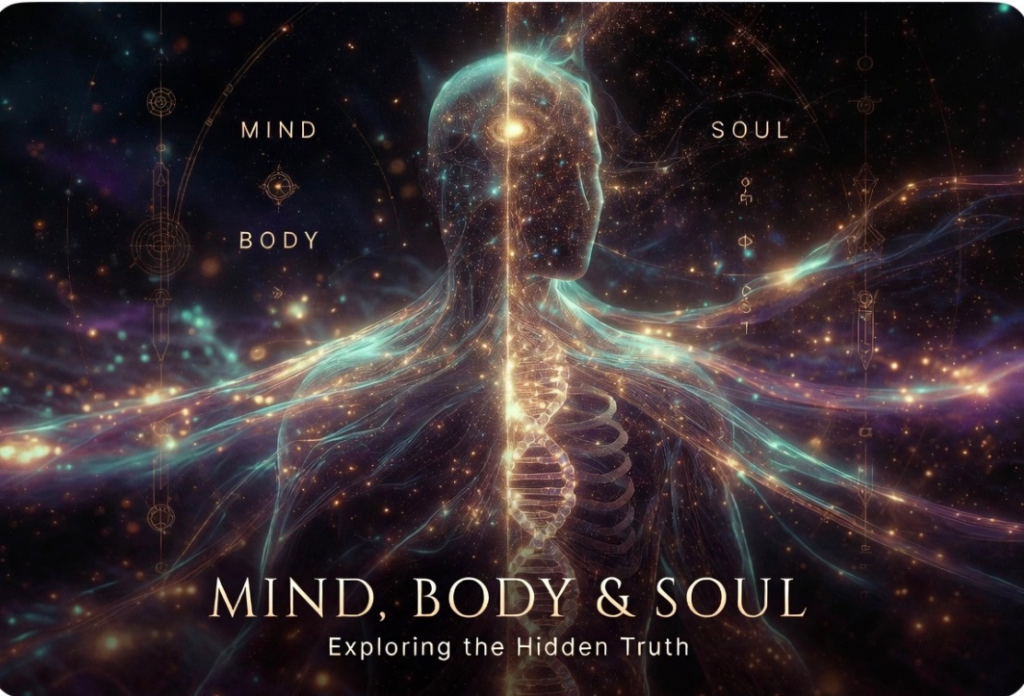
The notion that mind, body, and soul operate as separate entities is a modern fiction. In reality, these three dimensions of human existence are inseparably woven together, each influencing and shaping the others in a constant dance of cause and effect. Our thoughts alter our physiology; our physical experiences reshape our consciousness; our spiritual beliefs inform how we process the world. When we layer in trauma, environmental factors, and daily inputs—from the food we consume to the content we absorb—we begin to see that our wellbeing is not a matter of isolated concerns but a complex, holistic system. Understanding these connections is essential for genuine healing.
The Mind-Body-Soul Connection
Psychoneuroimmunology—the study of how psychological processes influence immune function—has scientifically validated what ancient wisdom traditions have long known: thoughts directly affect the body. When we experience anxiety, our nervous system triggers a cascade of hormonal responses: cortisol rises, blood pressure increases, digestion slows. Conversely, states of calm and gratitude activate the parasympathetic nervous system, promoting healing and restoration. The mind is not confined to the brain; it extends throughout the body via the vagus nerve and is reflected in our posture, breath, and cellular function.
The soul—understood here as our sense of purpose, meaning, and connection to something greater than ourselves—serves as the foundation for both mental resilience and physical vitality. People with strong spiritual practices, whether through religion, nature, creative expression, or community, demonstrate better health outcomes, lower stress markers, and faster recovery from illness. The soul provides the “why” that motivates the mind and energizes the body.
Trauma: The Fracture Point
Trauma shatters this integrated system. When we experience overwhelming distress—whether from abuse, loss, violence, or chronic stress—the brain’s threat-detection system becomes hyperactive. The amygdala (fear center) enlarges; the prefrontal cortex (reasoning center) diminishes in function; the hippocampus (memory center) struggles to process the experience properly. This isn’t psychological weakness; it’s a neurobiological reality.
The body bears witness to trauma through somatic symptoms: tension that becomes chronic pain, shallow breathing, digestive issues, autoimmune disorders, and cardiovascular problems. Trauma literally changes the body’s chemistry and structure. Survivors often report feeling disconnected from their bodies—a protective mechanism called dissociation—but one that perpetuates the fragmentation. The soul, meanwhile, may withdraw, dimming the sense of purpose and hope.
Trauma in the Physical Body
The connection between unresolved trauma and physical ailments is direct and measurable:
• Chronic pain: Trauma activates the nervous system’s pain amplification circuits. Fibromyalgia, widespread muscle tension, and unexplained pain often have roots in psychological injury.
• Autoimmune disorders: Prolonged stress and trauma dysregulate the immune system, causing it to attack the body’s own tissues.
• Cardiovascular disease: Chronic activation of the fight-flight response increases inflammation and cardiovascular risk.
• Digestive issues: The gut-brain axis means that trauma directly disrupts digestion, causing IBS, acid reflux, and dysbiosis.
• Hormonal imbalances: Trauma disrupts the hypothalamic-pituitary-adrenal (HPA) axis, affecting sleep, metabolism, and reproductive health.
Environment as an Active Force
Our environment is never passive; it is actively constructing us. The food we consume becomes our cells. Processed foods high in seed oils, refined sugars, and additives trigger inflammation and dysbiosis, altering gut bacteria that communicate directly with the brain through the vagus nerve. A disrupted microbiome influences mood, decision-making, and emotional regulation—sometimes more powerfully than conscious effort.
Chemicals in our environment—from pesticides to endocrine disruptors in plastics—mimic hormones and interfere with our neurochemistry. They accumulate in tissues and cross the blood-brain barrier, potentially exacerbating anxiety, depression, and cognitive dysfunction.
The Dopamine Trap
What we consume mentally is equally potent. Social media, news cycles, and entertainment are engineered to hijack attention and dopamine pathways. Continuous exposure to outrage, comparison, and stimulation dysregulates the nervous system, creating a baseline of agitation. This fragmentary, reactive mental state prevents the deep presence required for healing. In contrast, nature exposure, meaningful media consumption, and contemplative practices upregulate parasympathetic function and restore psychological equilibrium.
Integration and Healing
True healing requires addressing all three dimensions:
Mental: Therapy, particularly trauma-informed approaches like somatic experiencing or EMDR, helps the brain reprocess trauma and integrate fragmented memories.
Physical: Nourishing food, movement, sleep, and reducing chemical exposure provide the body’s biological foundation for healing.
Spiritual: Reconnecting with meaning, purpose, and belonging restores the soul’s vitality and motivates sustained change.
Conclusion
We are not minds that happen to inhabit bodies; we are unified beings in which consciousness, physicality, and spirit are expressions of a single system. Trauma fractures this unity, but it can be restored. By addressing the food we eat, the chemical environment we inhabit, the media we consume, and the practices we engage in—while simultaneously processing psychological wounds and nurturing spiritual connection—we honor the profound intelligence of our integrated nature. Healing is not a linear path but a spiral of deepening integration, where each dimension supports the others in the journey toward wholeness.





3 thoughts on “The Interconnected Trinity: Mind, Body, and Soul in the Context of Trauma and EnvironmentLet us explore the truth about mind, body and soulThe Interconnected Trinity: Mind, Body, and Soul in the Context of Trauma and EnvironmentLet us explore the truth about mind, body and soul”
Hi there! Is there an English version for your Mind, Body & Soul article? p.s… you are amazing!
I am excited about your website and looking forward to learning at lot! I can’t wait to see the English version of the mind, body, and soul article.
Congrats, best wishes, and blessings!
Delighted you’ve developed the articles, podcasts and website. I’ve always loved your short videos on X. Could you possibly put these on your website? It’s a huge part of your output so it would be great to have things in one place.
Haven’t been able to see your X videos for ages now. I’ve become a bit of a Luddite over the years and have not renewed older devices that still work. It’s probably not generally known but in the past few months/year, older devices have been kicked off platforms like X and IG, so linking to X video would still mean they can’t be seen by all devices. Youtube, Rumble etc. are still working. In my humble opinion, it’s always best to have full control of your output on your own site rather than it being diffuse over many platforms, with those platforms calling the shots.
Huge congrats on new and exciting adventures!