
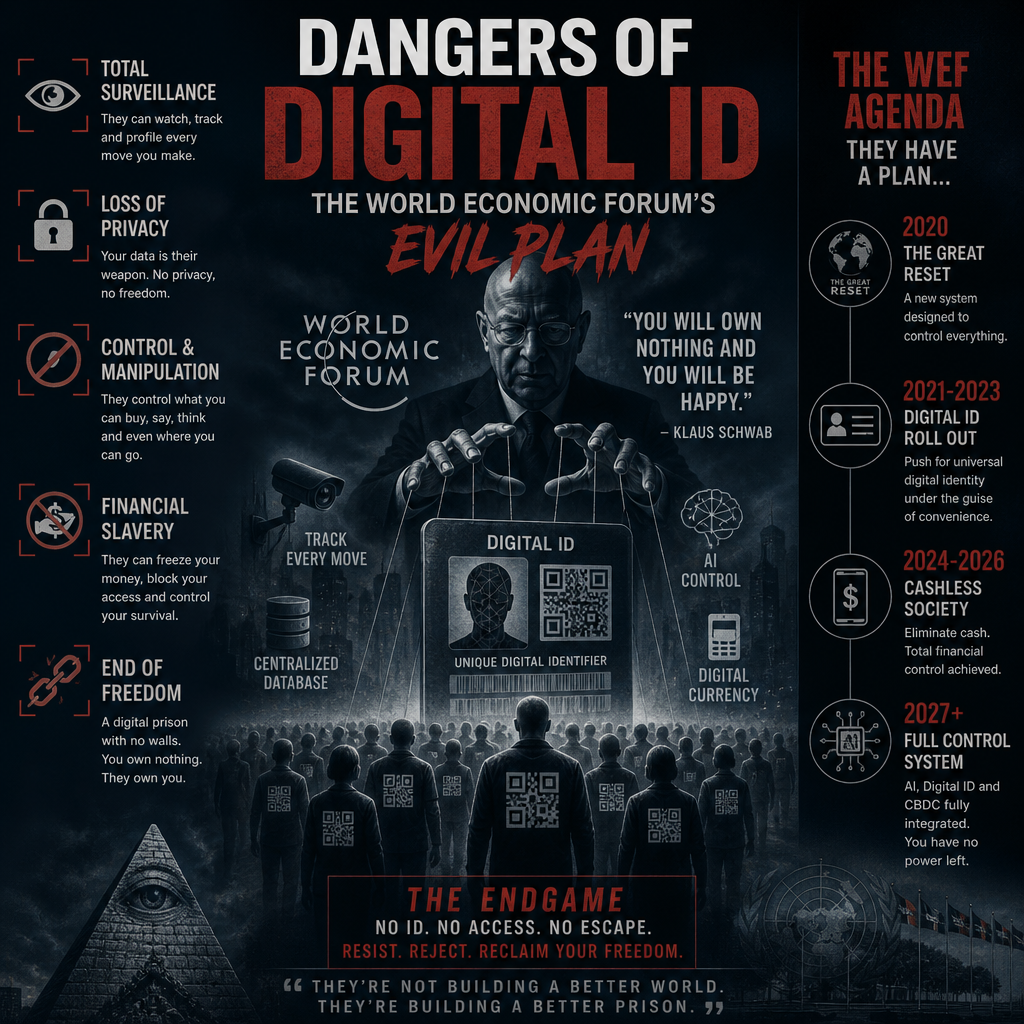
Digital identity can make everyday tasks faster. A person may use a digital credential to prove their age, access government services, or verify a bank account without carrying several documents. The World Economic Forum has discussed digital identity through principles such as privacy, security, inclusion, and giving people meaningful control over their data. Those are worthwhile goals. But principles on paper do not guarantee that a real system will respect them. The central question is not simply whether digital ID is convenient; it is who controls it, what information it collects, and what happens when it fails.
One major risk is surveillance through data linkage. A digital ID may connect a person’s identity to services that were once separate. If the system records when and where someone uses it, or links identity checks to health, financial, travel, or government records, it could create a detailed picture of that person’s life. This does not mean every digital ID automatically tracks every activity. It does mean that system design matters: unnecessary data collection, long retention periods, and weak limits on sharing can turn a convenient credential into a powerful tool for monitoring.
A second concern is function creep, the gradual expansion of a system beyond its original purpose. A credential introduced to simplify access to public services could later become necessary for activities its designers never initially proposed. New uses might be added through legislation, contracts, or technical changes. Strong laws can limit this, but protections are less convincing if they can be changed easily or if people have no practical alternative to using the system.
Digital ID also creates security and privacy risks. Centralized databases can become attractive targets for criminals, while poorly designed systems may expose sensitive information through data breaches or unauthorized access. Even without a breach, collecting more information than is necessary increases the potential harm if something goes wrong. A safer design would reveal only what is needed, for example, confirming that someone is over a required age without disclosing their birth date and would avoid storing a single, comprehensive record of every use.
A third danger is exclusion. Not everyone owns a modern smartphone, has reliable internet access, can easily use biometric technology, or can navigate an online application. People may also face problems because of disability, unstable housing, language barriers, lost devices, or errors in official records. If digital ID becomes the only route to essential services, those who cannot use it, or whose credentials are wrongly rejected—may be shut out. A truly inclusive system needs accessible alternatives, in-person help, and a fair way to correct mistakes and appeal decisions.
These are concrete concerns. Concerns, that can lead to full one world governance is not a farfetched theory, considering the Canadian liberal government enacted the illegal use of the Emergency Act (only used in circumstances of war) to lock hundreds of people out of their bank accounts for merely protesting the draconian Covid mandates. Even the ones that were not present, but donated had their bank accounts locked. This was the clearest example of their overreach, especially when you know that Trudeau and the liberal government officials are heavily involved with the WEF.
The WEF-style principles of privacy, security, inclusion, and user agency are useful standards only if they are enforceable. People should know what data is collected, be able to use essential services without surrendering unnecessary information, and have genuine alternatives when digital verification is unavailable. Independent audits, strict limits on data sharing and retention, public oversight, and meaningful penalties for misuse are equally important.
Digital identity is neither automatically a tool of liberation nor automatically a system of control. Its effects depend on its design and governance. Convenience should not come at the cost of privacy, equal access, or the ability to participate in society. Before adopting any system, the public should ask not only what it promises to make easier, but also who can use it, who can monitor it, and who has the power to say no.





1 thought on “The Risks Behind Digital Identity”
Tajana,
Stumbled upon your FB and linktree. Quite the journey you have traveled. It’s definitely satisfying to see younger people, as yourself, still have true common sense in this crazy world. Love you reels!! Read a few of your posts. Just to add to your ” The Risk Behind Digital Identity”…. then there is (AI, AGI, ASI).
Ken
US citizen, Republican