
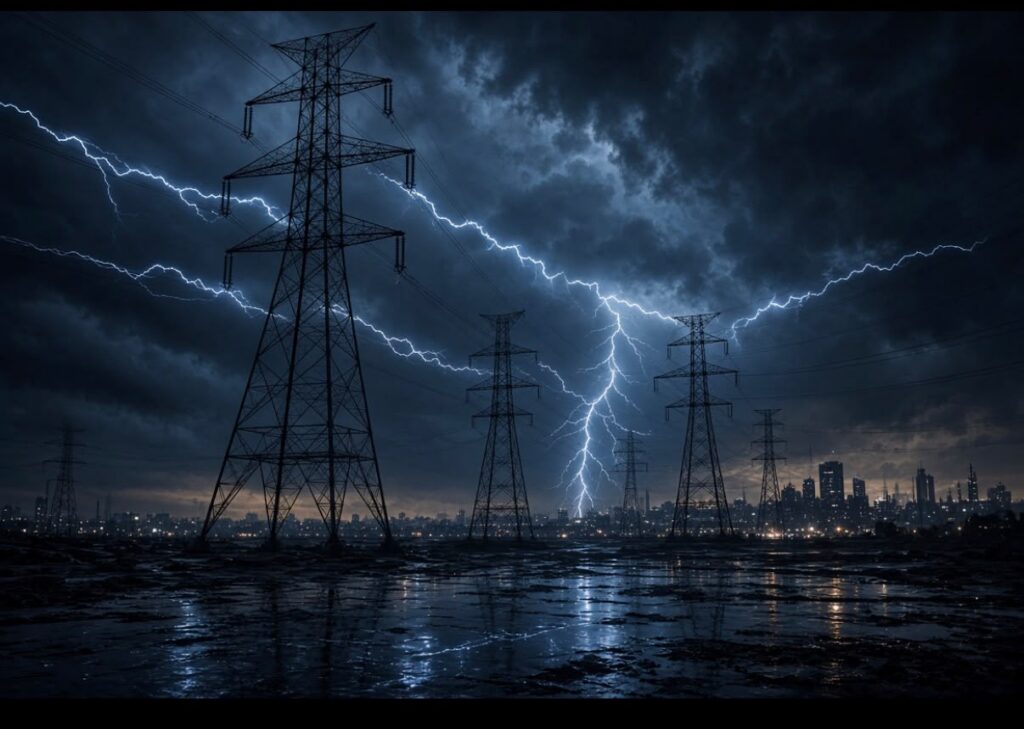
Imagine a large city losing electricity not for an hour, but for a full week. The lights would be the first thing people noticed. They would not be the last.
A prolonged blackout would not affect every neighborhood or service in the same way. Some buildings have generators; some hospitals have backup systems; some parts of the grid might be restored sooner than others. The picture below is a plausible scenario, not a forecast: a widespread outage that lasts seven days and leaves much of a major city without reliable electricity.
The first 24 hours: inconvenience turns into disruption
At first, the city might seem strangely quiet. Traffic signals go dark, trains stop, and elevators halt between floors. People reach for their phones, but mobile service becomes patchy as local equipment runs on batteries or backup generators. Internet access can disappear along with power to routers, neighborhood equipment, and data centers.
Homes lose lighting and electric appliances. Refrigerators and freezers begin to warm up. In buildings that rely on electric pumps, water pressure may weaken, especially on upper floors. Gas appliances may still work in some homes, but many modern furnaces, boilers, and stoves need electricity to operate.
Shops close or switch to limited service. Card readers and cash machines may be unavailable, making it harder to buy food, fuel, or medicine. Even where a store has a generator, it may not have enough power to run normally.
Days two and three: backup systems meet their limits
Critical facilities would prioritize their available backup power. Hospitals generally have emergency generators for essential equipment, but backup power does not mean every service continues as usual. Staff may have to postpone some procedures, conserve supplies, and transfer patients if fuel, equipment, or staffing becomes difficult to sustain.
Water and wastewater systems are especially important. Many rely on electric pumps and controls. Backup power, gravity-fed storage, and emergency procedures can keep some systems working, but pressure or service may become unreliable if the outage continues. Residents might be asked to conserve water or use bottled supplies.
Transportation also becomes harder. Electric trains, subways, and many traffic-management systems depend directly on power. Buses and cars may still run, but congestion can grow when signals are out, fuel stations cannot pump, and charging stations are unavailable. Deliveries slow down, affecting food, medicines, and other necessities.
|
Service |
What people might notice |
Why it matters |
|
Water |
Lower pressure or service interruptions in some areas |
Pumps, treatment controls, and building systems need power |
|
Transport |
Stalled rail service, dark signals, crowded roads |
Electric systems stop; congestion can hinder emergency travel |
|
Communications |
Unreliable mobile service and internet |
Backup batteries and generators have limited capacity |
|
Food and medicine |
Closed shops, warming refrigerators, delivery delays |
Cold storage, payment systems, and logistics are disrupted |
|
Healthcare |
Emergency care continues, but some services are reduced |
Backup power supports essential operations, not necessarily normal capacity |
|
Homes |
Dark rooms, no elevators, changing indoor temperatures |
Lighting, pumps, heating, cooling, and appliances may depend on electricity |
Days four through seven: daily routines are reorganized
By the middle of the week, the effects would be less about darkness and more about the systems people normally take for granted. A building’s water pressure might be inconsistent. Grocery shelves could be thin, especially for refrigerated food. Pharmacies and clinics might be operating on reduced hours. People who depend on powered medical devices, refrigerated medication, elevators, or regular home-care visits could face especially difficult choices.
In homes, comfort would depend on the season and the building. During a heat wave, apartments could become dangerously hot; during cold weather, indoor temperatures could fall, particularly in buildings with electric heating or electric controls. Cooking would be limited to appliances that can operate safely without grid power. Refrigerators would no longer keep food cold indefinitely, and people would need to decide what to use, discard, or replace.
The blackout would also change how neighbors interact. People might share information, check on older residents, help carry supplies up stairwells, or gather at locations with power. At the same time, limited cash, fuel, transport, and communication could make it harder to find help or coordinate with family.
A prolonged blackout would not necessarily switch every public service off at once. Ambulance stations, police departments, water utilities, and some gas stations may have generators, batteries, or emergency procedures. But those measures are designed to bridge outages, not support normal operations for a week. As the outage continues, fuel, staffing, communications, equipment, and resupply become increasingly important.
The details would vary from city to city. A facility with a tested generator and a dependable fuel contract may keep operating, while another nearby facility may have to reduce service.
Ambulances and emergency medical services
The first challenge is receiving and dispatching calls. A 911 call center may have backup power, and emergency radio networks often have backup systems too. But that does not guarantee that every phone call or message will get through. Mobile networks may lose service as batteries run down or backup generators need refueling. Landlines, internet-based phone services, and dispatch systems can also be affected.
If calls do reach dispatch, ambulance crews may still be hindered by:
-
Dark or malfunctioning traffic signals, which slow travel and make intersections hazardous.
-
Traffic congestion, especially if public transit has stopped and people are driving.
-
Buildings without working elevators, making it harder to reach patients in high-rise apartments.
-
Limited access to fuel, which can constrain ambulances and other emergency vehicles.
-
Overloaded hospitals, if facilities are operating with reduced power or patients need to be moved.
Emergency services would likely prioritize life-threatening calls. Some routine or lower-priority responses could take longer, and callers might be directed to another facility or asked to wait. Ambulance services may also coordinate closely with hospitals, fire departments, police, and emergency management to decide where patients can be taken.
A functioning generator at a hospital can keep essential equipment running, but it does not mean the hospital can operate normally. A hospital may have to conserve fuel and supplies, defer some procedures, or transfer patients if the outage continues or other systems fail.
Police and public safety
Police departments generally have backup plans for dispatch, radios, and essential buildings. Officers can continue patrolling using vehicles and portable radios, but their work may become more difficult as the blackout persists.
A citywide outage can create practical problems even without widespread disorder:
-
Traffic enforcement: Dark signals and congested roads require officers to manage intersections and keep emergency routes clear.
-
Communications: Radio systems may continue on backup power, but cellular, internet, and computer-aided dispatch services may be unreliable.
-
Building access: Electronic locks, security systems, elevators, and surveillance cameras may stop working or operate intermittently.
-
Staffing: Employees may have difficulty traveling to work, arranging childcare, or getting food and fuel.
-
Coordination: Police must share information with fire, ambulance, utilities, and local government even when ordinary communications are disrupted.
Departments may adjust patrols and prioritize urgent incidents. Police do not replace utility crews or emergency medical teams, but they may help manage road closures, protect access to critical facilities, and direct people toward official assistance points.
Water treatment and wastewater
Water systems are among the most important, and least visible services affected by a long outage. Providing safe water involves more than keeping a treatment plant’s lights on. Utilities may need electricity to operate pumps, treatment equipment, monitoring systems, control rooms, and communications links.
Many systems have backup generators, stored water, gravity-fed reservoirs, or emergency operating procedures. These can help maintain service, but the degree of protection varies. Some parts of a system may keep working while others lose pressure or service.
Possible effects include:
-
Lower pressure. Water may still flow at street level but fail to reach upper floors, particularly in tall buildings that use electric booster pumps.
-
Restrictions or conservation requests. Utilities may ask residents and businesses to limit water use to preserve storage and system pressure.
-
Treatment and monitoring challenges. Operators may need to rely on backup power and alternate procedures to keep treatment and safety monitoring running.
-
Wastewater disruptions. Sewage systems also use pumps and controls. If pumping stations lose power, utilities may use backup power and emergency measures, but prolonged problems can increase the risk of overflows.
-
Uneven impacts. Neighborhoods at higher elevations, buildings with electric pumps, and areas dependent on particular pumping stations may be affected sooner than others.
A loss of electricity does not automatically mean that all tap water becomes unsafe. The utility or public-health authority would assess the system and issue instructions, such as a conservation request or a boil-water notice, if needed. Residents should follow local alerts rather than assume water is safe or unsafe based only on the blackout.
Gas stations and fuel supply
A gas station may have fuel in its underground tanks, but that does not mean it can dispense it. Most fuel pumps need electricity, and stations may also rely on power for payment terminals, lighting, inventory systems, and security equipment.
Some stations may have generators or be selected to support emergency operations. Even then, they may have limited capacity, limited fuel, or long queues. A station that is open may accept only certain payment methods or serve emergency vehicles first.
Fuel availability also depends on the wider supply chain:
-
Fuel terminals and distribution equipment may need power.
-
Tanker trucks need drivers, passable roads, and functioning logistics systems.
-
Stations need deliveries from those terminals.
-
Emergency services, utilities, hospitals, and other critical users may receive priority.
As a result, a city could have fuel physically present in storage tanks but still face shortages at the pump. People may travel farther to find an operating station, adding traffic and using more fuel. Public officials may direct residents to specific locations or ask them not to drive unless necessary.
Never use a generator, portable stove, or other fuel-burning equipment indoors or in an enclosed space. Generators should be operated outdoors, far from doors, windows, and vents, following the manufacturer’s instructions. Carbon monoxide has no reliable warning smell and can be deadly. Imagine a large city losing electricity not for an hour, but for a full week. The lights would be the first thing people noticed. They would not be the last.
A prolonged blackout would not affect every neighborhood or service in the same way. Some buildings have generators; some hospitals have backup systems; some parts of the grid might be restored sooner than others. The picture below is a plausible scenario, not a forecast: a widespread outage that lasts seven days and leaves much of a major city without reliable electricity.
The first 24 hours: inconvenience turns into disruption
At first, the city might seem strangely quiet. Traffic signals go dark, trains stop, and elevators halt between floors. People reach for their phones, but mobile service becomes patchy as local equipment runs on batteries or backup generators. Internet access can disappear along with power to routers, neighborhood equipment, and data centers.
Homes lose lighting and electric appliances. Refrigerators and freezers begin to warm up. In buildings that rely on electric pumps, water pressure may weaken, especially on upper floors. Gas appliances may still work in some homes, but many modern furnaces, boilers, and stoves need electricity to operate.
Shops close or switch to limited service. Card readers and cash machines may be unavailable, making it harder to buy food, fuel, or medicine. Even where a store has a generator, it may not have enough power to run normally.
Days two and three: backup systems meet their limits
Critical facilities would prioritize their available backup power. Hospitals generally have emergency generators for essential equipment, but backup power does not mean every service continues as usual. Staff may have to postpone some procedures, conserve supplies, and transfer patients if fuel, equipment, or staffing becomes difficult to sustain.
Water and wastewater systems are especially important. Many rely on electric pumps and controls. Backup power, gravity-fed storage, and emergency procedures can keep some systems working, but pressure or service may become unreliable if the outage continues. Residents might be asked to conserve water or use bottled supplies.
Transportation also becomes harder. Electric trains, subways, and many traffic-management systems depend directly on power. Buses and cars may still run, but congestion can grow when signals are out, fuel stations cannot pump, and charging stations are unavailable. Deliveries slow down, affecting food, medicines, and other necessities.
|
Service |
What people might notice |
Why it matters |
|
Water |
Lower pressure or service interruptions in some areas |
Pumps, treatment controls, and building systems need power |
|
Transport |
Stalled rail service, dark signals, crowded roads |
Electric systems stop; congestion can hinder emergency travel |
|
Communications |
Unreliable mobile service and internet |
Backup batteries and generators have limited capacity |
|
Food and medicine |
Closed shops, warming refrigerators, delivery delays |
Cold storage, payment systems, and logistics are disrupted |
|
Healthcare |
Emergency care continues, but some services are reduced |
Backup power supports essential operations, not necessarily normal capacity |
|
Homes |
Dark rooms, no elevators, changing indoor temperatures |
Lighting, pumps, heating, cooling, and appliances may depend on electricity |
Days four through seven: daily routines are reorganized
By the middle of the week, the effects would be less about darkness and more about the systems people normally take for granted. A building’s water pressure might be inconsistent. Grocery shelves could be thin, especially for refrigerated food. Pharmacies and clinics might be operating on reduced hours. People who depend on powered medical devices, refrigerated medication, elevators, or regular home-care visits could face especially difficult choices.
In homes, comfort would depend on the season and the building. During a heat wave, apartments could become dangerously hot; during cold weather, indoor temperatures could fall, particularly in buildings with electric heating or electric controls. Cooking would be limited to appliances that can operate safely without grid power. Refrigerators would no longer keep food cold indefinitely, and people would need to decide what to use, discard, or replace.
The blackout would also change how neighbors interact. People might share information, check on older residents, help carry supplies up stairwells, or gather at locations with power. At the same time, limited cash, fuel, transport, and communication could make it harder to find help or coordinate with family.
A prolonged blackout would not necessarily switch every public service off at once. Ambulance stations, police departments, water utilities, and some gas stations may have generators, batteries, or emergency procedures. But those measures are designed to bridge outages, not support normal operations for a week. As the outage continues, fuel, staffing, communications, equipment, and resupply become increasingly important.
The details would vary from city to city. A facility with a tested generator and a dependable fuel contract may keep operating, while another nearby facility may have to reduce service.
Ambulances and emergency medical services
The first challenge is receiving and dispatching calls. A 911 call center may have backup power, and emergency radio networks often have backup systems too. But that does not guarantee that every phone call or message will get through. Mobile networks may lose service as batteries run down or backup generators need refueling. Landlines, internet-based phone services, and dispatch systems can also be affected.
If calls do reach dispatch, ambulance crews may still be hindered by:
-
Dark or malfunctioning traffic signals, which slow travel and make intersections hazardous.
-
Traffic congestion, especially if public transit has stopped and people are driving.
-
Buildings without working elevators, making it harder to reach patients in high-rise apartments.
-
Limited access to fuel, which can constrain ambulances and other emergency vehicles.
-
Overloaded hospitals, if facilities are operating with reduced power or patients need to be moved.
Emergency services would likely prioritize life-threatening calls. Some routine or lower-priority responses could take longer, and callers might be directed to another facility or asked to wait. Ambulance services may also coordinate closely with hospitals, fire departments, police, and emergency management to decide where patients can be taken.
A functioning generator at a hospital can keep essential equipment running, but it does not mean the hospital can operate normally. A hospital may have to conserve fuel and supplies, defer some procedures, or transfer patients if the outage continues or other systems fail.
Police and public safety
Police departments generally have backup plans for dispatch, radios, and essential buildings. Officers can continue patrolling using vehicles and portable radios, but their work may become more difficult as the blackout persists.
A citywide outage can create practical problems even without widespread disorder:
-
Traffic enforcement: Dark signals and congested roads require officers to manage intersections and keep emergency routes clear.
-
Communications: Radio systems may continue on backup power, but cellular, internet, and computer-aided dispatch services may be unreliable.
-
Building access: Electronic locks, security systems, elevators, and surveillance cameras may stop working or operate intermittently.
-
Staffing: Employees may have difficulty traveling to work, arranging childcare, or getting food and fuel.
-
Coordination: Police must share information with fire, ambulance, utilities, and local government even when ordinary communications are disrupted.
Departments may adjust patrols and prioritize urgent incidents. Police do not replace utility crews or emergency medical teams, but they may help manage road closures, protect access to critical facilities, and direct people toward official assistance points.
Water treatment and wastewater
Water systems are among the most important, and least visible services affected by a long outage. Providing safe water involves more than keeping a treatment plant’s lights on. Utilities may need electricity to operate pumps, treatment equipment, monitoring systems, control rooms, and communications links.
Many systems have backup generators, stored water, gravity-fed reservoirs, or emergency operating procedures. These can help maintain service, but the degree of protection varies. Some parts of a system may keep working while others lose pressure or service.
Possible effects include:
-
Lower pressure. Water may still flow at street level but fail to reach upper floors, particularly in tall buildings that use electric booster pumps.
-
Restrictions or conservation requests. Utilities may ask residents and businesses to limit water use to preserve storage and system pressure.
-
Treatment and monitoring challenges. Operators may need to rely on backup power and alternate procedures to keep treatment and safety monitoring running.
-
Wastewater disruptions. Sewage systems also use pumps and controls. If pumping stations lose power, utilities may use backup power and emergency measures, but prolonged problems can increase the risk of overflows.
-
Uneven impacts. Neighborhoods at higher elevations, buildings with electric pumps, and areas dependent on particular pumping stations may be affected sooner than others.
A loss of electricity does not automatically mean that all tap water becomes unsafe. The utility or public-health authority would assess the system and issue instructions, such as a conservation request or a boil-water notice, if needed. Residents should follow local alerts rather than assume water is safe or unsafe based only on the blackout.
Gas stations and fuel supply
A gas station may have fuel in its underground tanks, but that does not mean it can dispense it. Most fuel pumps need electricity, and stations may also rely on power for payment terminals, lighting, inventory systems, and security equipment.
Some stations may have generators or be selected to support emergency operations. Even then, they may have limited capacity, limited fuel, or long queues. A station that is open may accept only certain payment methods or serve emergency vehicles first.
Fuel availability also depends on the wider supply chain:
-
Fuel terminals and distribution equipment may need power.
-
Tanker trucks need drivers, passable roads, and functioning logistics systems.
-
Stations need deliveries from those terminals.
-
Emergency services, utilities, hospitals, and other critical users may receive priority.
As a result, a city could have fuel physically present in storage tanks but still face shortages at the pump. People may travel farther to find an operating station, adding traffic and using more fuel. Public officials may direct residents to specific locations or ask them not to drive unless necessary.
Never use a generator, portable stove, or other fuel-burning equipment indoors or in an enclosed space. Generators should be operated outdoors, far from doors, windows, and vents, following the manufacturer’s instructions. Carbon monoxide has no reliable warning smell and can be deadly.



3 thoughts on “Seven Days Without Power: What a Major-City Blackout Could Look Like”
Thank you for all you do 🙏 I truly appreciate you. A fellow truth seeker. My dad told me to save seeds over 30 years ago. People thought he was CRAZY. Everything he ever told me has come to fruition. In your heart of hearts do you really think the elites the Oligarchs will allow this to happen?
Never saw any mention of what all the opportunist criminal element would be doing – looting stores and robbing citizens.
That is informative. Maybe do an article about what you can do. Like built a fire surrounded by rocks and use your oven rack to cook on. I have vinegar bottles full of frozen water in my spare freezer so that I can use for keeping my beef freezer cold if needed. We have access to river water for drinking. Dehydrate beef jerky then I put in my frost free fridge as it will suck out any moisture. Also if you have freeze dried food you can only eat for 5 days then you need 2 days of fresh food. This is due to the low nutrients in freeze dried. I heard this from a guy that was in the army. Might be incorrect. Love and appreciate you. Your husband is great! Take care Dawn